Wednesday, March 19, 2014

Ill-Advised Story: A Horrendous Haircut

Mischievous, smart, and Persuasive.
Those are three words to describe my neighbor as a six-year-old. Whenever you’re a kid, your friends are your neighbors. Whoever you've got living in that brick house next to you is who you’re stuck with. So, my best friend was Maggie Fisk.
We had known each other since I first moved here when I was two. In that time, we had gotten into many similar situations as the one I’m about to tell you. Such as, getting stuck in a tree, making extremely salty fortune cookies, and numerous lemonade stands where we ran out of lemonade before we had any customers. We would haul my plastic picnic table from my patio to the street corner, mix and stir the lemonade, and then by the time we would carry it out there, every last drop would be gone as if by magic.
But, on this day, the sun was setting in the orange sky and there were no clouds in sight. Today was the day Maggie decided to cut my hair. It was a rash decision; I don’t really think she knew what she wanted to do until the gleam of the scissors caught her green eyes. But, she decided this and that was what we were going to do. And so we did.
Because I was the daughter of every mother’s dreams, of course, I knew this was something that I would regret. And that it was more likely to be in my mom’s nightmares than her dreams. As it just so happened, my troublesome neighbor knew exactly what strings to pull to make me give in.
“Amyyyy?” She said as she tucked her disheveled brown hair behind her ear.
That was the voice Maggie made when she wanted to do something she knew I wouldn't. I had come to recognize the subtle change in pitch and the way her eyebrows scrunched together.
“I have an idea,” she’d say. She had lots of ideas.
“Let me cut your hair!” The excitement and volume in her voice grew with each word and I could tell I wasn’t going to like the next sentence that came out of her minuscule mouth.
“Listen, Amy. If I want to be a hair cutter when I grow up, I’m going to need to practice!”
Somehow, that made perfect sense in my five-year-old head. But that’s the thing when you’re a kid, you don’t think too much; you just do.
So I did. And she took snippet after snippet of hair off my head until the ends were as uneven as a broken shard of glass, and I had a slight bald spot on the back of my head. The floor was littered with varying lengths of my scraggly hair. It was stuck to the mirror, wall, and shower.
Needless to say, Maggie was proud of her work despite the mess and she wanted to show off her skills. But I’m not quite sure our parents were the correct audience for this.
We stood in front of my blue wooden front door and rang the doorbell. It seemed like eternity as we stood there. Bees buzzed around the flowerpot, birds sung at the top of the blossoming trees, and yet no one was coming to the door. But then, we heard the soft thuds of shoes hitting the carpeted floor. The door swished open, there stood my speechless mother. Her mouth transformed into an ‘o’ and her smile disappeared faster than a cheetah can run. And then she just burst into tears. Her teardrops ran down her cheek and started to drip off her chin. Eyes wide, Maggie ran home as fast as she could possibly go and I ran inside before my mom could say another word. It turns out it was just a bad day for my mom, but I’m pretty sure I just looked awful.

And the truth of the matter is Maggie did not grow up to be a hair cutter. She does not do anything related to hair, scissors, or cosmetology in general. So I guess all of that was really for nothing.


One thing I think I did well was plot and voice. I really believe that you could hear my voice through my words and I think the plot was interesting. Also, I struggled with descriptive words in my first draft, and I really worked hard to add them in. I think I did a pretty good job with it. Lastly, I'm proud of the end because I like how it brings up something I said earlier in the story.

Thursday, February 20, 2014

Final Blog Reflection

In this blog post, I think I did a really good job incorporating voice. Some examples of this are when I said, “Divergent is a good book. Great even. And there are many things I like about it!” (Paragraph One), “If that is not a cliffhanger I don't know what is.” (Paragraph 5), and “(Or Christina, really.)” (Paragraph 7). These three are just examples. There were many other words or phrases that show my voice as well. These showcase my personality as a writer because I am an enthusiastic and somewhat sarcastic writer. In the first quote, not only did I let you know that divergent is great; I told you how great it was and how passionate I am about it. The reader can learn about me through those words and know that I really am enthusiastic. When I explained that it was a cliffhanger in quote three, I didn't just say; that was a cliffhanger. I infused that sentence with my own voice. I made it extremely clear that the example I gave was definitely a cliffhanger, and that I was completely positive of it. Not only did it tell the reader how sure of myself I was, it feels like you are having a conversation with me. In a blog post, people don’t want to read extremely high or elevated diction because we won’t feel like we will relate to the author. As readers, we like to gain a relationship to the author through their book, column, or blog. Lastly, in the third quote, I poked fun at the story. The reader can learn that I am a somewhat humorous, sarcastic, and not to be taken too seriously. In all of the types of literature we read, we learn about the writer, whether subconsciously or not. I think I made it clear what type of writer I am through my voice in my blog posts.


My choices of diction and syntax were not incidental. I did them on purpose. For example, I used the word, “boring” in my last paragraph. This is low or informal diction. I chose to use boring instead of dull, monotonous, or tedious because I wanted a word that everyone could understand. I don’t know anyone who hasn't at some time or another said: School is boring. I’m bored. And etc. Everyone knows how it feels to be bored. If there was an extremely educated person and an extremely under educated person reading my blog, they would both understand it! That’s exactly what I want to happen. In the last paragraph, I ask a rhetorical question. This creates a relationship between my reader and I and makes them feel like I am talking directly to them. Another syntax technique I used was unique punctuation. Several times, I would interrupt myself with a short phrase or sentence that either contributed to the voice in my blog, or added to my point. One of these times is when I said, “(Of course you turn the page. You can’t just end on that!)” in the fifth paragraph. I think using parenthesis to do this is an excellent way to interject and let the reader know that this snippet of text is an addition to my writing. Also, I chose to structure my blog in smaller paragraphs because I think it is much easier to read that way. These are just a few of the examples, and I’m sure if you read my blog, you could find even more!

Wednesday, February 19, 2014

Best Thing about Divergent: Cliffhanger

Divergent is a great book. Great even. And there are many things I like about it! But my absolute favorite is how suspenseful it is. At the end of every page and chapter, there is almost always a cliffhanger that keeps the pages turning. A cliffhanger is, "A plot device in fiction which features a main character in a precarious or difficult dilemma, or confronted with a shocking revelation at the end of an episode of serialized fiction." (Danielle 1). Or, to put it simply, it is something authors put in their books to keep it interesting.

An example of this is at the end of chapter nine:

"She drops to the ground."

Christina had been hanging off an extremely high railing and since they live in dauntless no one could help her up. She had to use her own strength, and obviously it wasn't enough.

If that is not a cliffhanger I don't know what it is. This is literally a life or death moment and as you turn the page (of course you turn the page. You can't just end on that!) you find yourself asking questions. Does she die? Does she just get hurt? And if you are like me, you'll find yourself pleading with the author, as if you can do anything to change it. Please don't let her die! I like Christina!

No matter how emotional you get when you read, you will find that if an author uses a cliffhanger, it will be extremely hard to put the book down.


I really like cliffhangers in books because I like when the plot is really eventful. I think books are boring when nothing really happens. When authors just leave me hanging (Or Christina, really) it keeps my thoughts from drifting away, and isn't the whole point of this book to entertain? It wouldn't be doing it's job if it wasn't intriguing.

Thursday, February 13, 2014

What I Want to Read Next

I know that I am still reading Divergent, but I would like to take a second and talk about the next two books.  You can probably tell I'm excited for them! See the links below for more information. Have any of you read them? Leave me a comment whether you liked them or not in the comment section below!

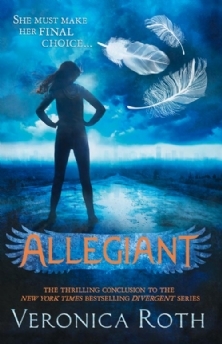
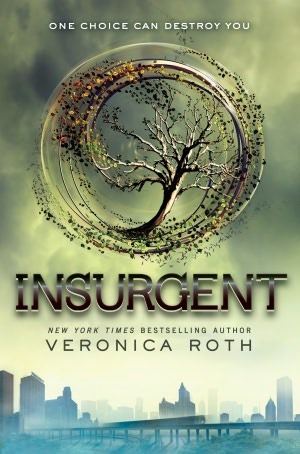
Insurgent and Allegiant:

Insurgent (Divergent, #2)
Allegiant (Divergent, #3)

These books are the second and third in the Divergent Series. I want to read these next because I really enjoyed the first book in their series. Honestly, I don't know anyone who didn't like them. I also love Veronica Roth's writing style. I wonder how they will be different from Divergent. From the summary for Insurgent (see below for the link) I can tell that it will be very suspenseful. It mentions shocking choices and sacrifices. How could she sacrifice more? She has already abandoned her family and been physically beaten! I predict that she will run away because that would be a huge sacrifice. She would be leaving her new friends, childhood, and family. I think she will have to do this because she is in danger because she has a divergent mind. The first thing I notices about Allegiant's  cover is how different it is. The first two have the same basic set up whereas it it much more modern. I believe this book will wrap up any loose ends of the first two as well as have it's own conflict and plot line. Mrs. Bross has told me that she didn't like it as much as the others because Veronica Roth rushed it. I'm hoping I will still enjoy it, anyways.


Here is the Goodreads summary for Insurgent.
Here is the Goodreads summary for Allegiant.


Thursday, January 30, 2014

Divergent Connections

My recent book is very relatable to me, the world, and the other books I've read. For instance, one text to text connection is that Divergent is similar to The Hunger Games. I think this because both are dystopian sci-fi novels. Also, Katniss and Triss both are very responsible.

You might be wondering how I could find similarites in my life compared to the crazy society in Divergent. While the worlds are extremely different, the characters aren't. For example, Tris is very unsure at the beginning of the book. I relate to that because I change my mind on things a lot. For instance, I can never decide to buy something or to not. I think that if I were faced with the big decision of choosing a faction that Tris has, then I would have even harder of a time.

Lastly, a text to world connection is that in many places, such as an Aborigine Tribe, if you choose to leave, you cannot come back. This is very similar to Tris because if she chooses to be dauntless, then she will basically be disowning her family. That's something I would never want to do...

If the idea about the Aborigine Tribe interests you check out this link!

Wednesday, January 22, 2014

Setting of Divergent

Divergent is a Dystopian novel. This means it takes place in some future society. I know this because the author tells us where it is (Chicago) and this government is nothing like Chicago today, or what has ever happened there. Also, there is future technology demonstrated. There is no way, as of today, to tell what kind of a person they are and what they are good at in only a short meeting.

The author directly tells us that the place is Chicago. In some ways I think this is good, but in some ways I don't like it. I like being able to picture it, and be able to describe it easier, but I don't like how it doesn't leave much up to the imagination. However, since this is taking place in the future, we can assume that many things have changed.

To finish the blog post, I would like to suggest clicking here if you are interested in learning more about the connections to present day Chicago.

Thursday, January 16, 2014

Why did I choose to read Divergent?

As I was browsing good reads, and trying to decide what to read, I saw the book Divergent. What exactly makes someone choose a book and begin to read it?

The Cover

As you can see, the cover on the right, is very to the appealing to the eye. When you first look at it you see the ring of fire because the orange and yellow it much brighter than the blue background of the book. I think this fire represents the fire in the hearts of the people who want to rebel against the faction lead government. Also, it represents the dauntless faction because they are know to be brave. Next, you notice the title and author. These are very important because you need to know the title if you want to read something. If you really study it you can see the city skyline. I know that this particular skyline is Chicago because that is the setting of the book. This element is very important to the book because not only does it allow the reader to use imagery, it allows them to relate to it if they have ever been to Chicago. Lastly, notice the smoke. I think this is symbolic for how the four factions are shielded from another. This means, that if you are in the dauntless faction, and your family is in another, then you cannot talk to them.


Synopsis

In Beatrice Prior’s dystopian Chicago world, society is divided into five factions, each dedicated to the cultivation of a particular virtue—Candor (the honest), Abnegation (the selfless), Dauntless (the brave), Amity (the peaceful), and Erudite (the intelligent). On an appointed day of every year, all sixteen-year-olds must select the faction to which they will devote the rest of their lives. For Beatrice, the decision is between staying with her family and being who she really is—she can’t have both. So she makes a choice that surprises everyone, including herself.

During the highly competitive initiation that follows, Beatrice renames herself Tris, and struggles alongside her fellow initiates to live out the choice they have made. Together, they must undergo extreme physical tests of endurance and intense psychological simulations, some with devastating consequences. As initiation transforms them all, Tris must determine who her friends really are—and where, exactly, a romance with a sometimes-fascinating, sometimes-exasperating boy fits into the life she’s chosen. But Tris also has a secret: one she’s kept hidden from everyone, because she’s been warned it can mean death. And as she discovers unrest and growing conflict that threatens to unravel her seemingly-perfect society, she also learns that her secret might be what helps her save those she loves . . . or it might be what destroys her.
 
I realize that this is in extremely small font, so if you would like to see it on the other's blog, click here. Once you look at the cover, you want to find out what the book is really like because you can't tell what it is really about just from the pictures. There are several things every good synopsis has including the setting, character introduction, conflict introduction, and background information to allow you to understand the previous things. In the first line, you learn the main character and setting. The rest of the paragraph reveals the conflict. Then, the next paragraph gives what makes the situation difficult to Beatrice Prior. This is an extremely well written synopsis because it really draws the reader in. It demonstrates extremely well syntax when it says, "extreme" and intense". These words are a part of what makes this interesting. Lastly, there is creative syntax in the last time. The author's use of ellipse increases the curiosity of the reader. Without a powerful synopsis, this book would not have been as successful as it is.
 

First Line

"There is one mirror in my house. It is behind a sliding panel in the hallway upstairs. Our faction allows me to stand in front of it on the second day of every third month, the day my mother cuts my hair."
As a reader, this line sparks my curiosity because it illustrates the life the protagonist in the book. It also makes me question why she is only allowed to look in a mirror once a month. This first line is important to the reader because it gives us an idea of what the author's craft is like. If the author was had a very sarcastic, dry tone and a lot of times sarcasm goes right over your head, you probably wouldn't understand or like the book.
I hope next time you pick up a book you will consider this!